

Which Of The Following Adaptations Would Help An Animal To Survive In A Polar Region?
Adaptations & Characteristics
How practise polar bears survive, and thrive, on the Arctic bounding main ice? Follow Anuri to detect their secrets.
Wonderfully Adjusted
In the Chill, temperatures tin plunge to -40° or -46 C (-l F) in wintertime and stay that mode for days or weeks. But polar bears are built for those weather condition.
From fur to skin, to paws and claws, the bounding main conduct's physique is designed to protect them from the common cold, hunt seals, and dominate the Arctic.
Two Layers of Fur
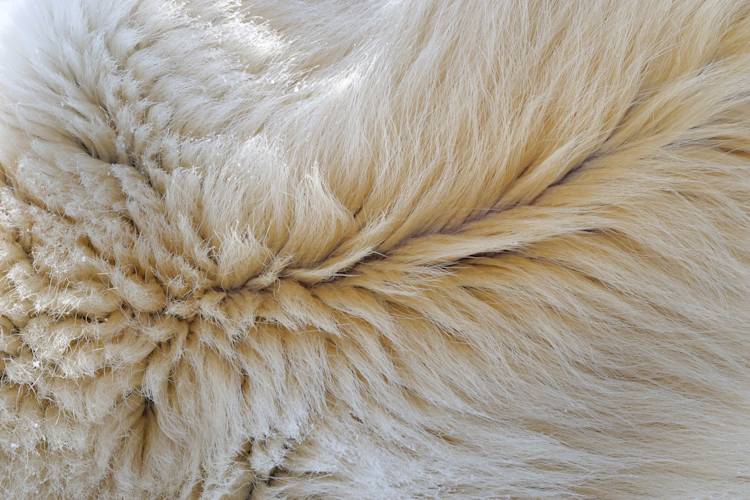
Polar bears have two layers of fur that prevent virtually all heat loss. In fact, the fur keeps them so warm that developed males tin speedily overheat when they run.
Surprisingly, their fur isn't actually white. It merely looks that way. Each hair shaft is pigment-free and transparent with a hollow cadre that scatters and reflects visible light.
Thick Padding of Fat
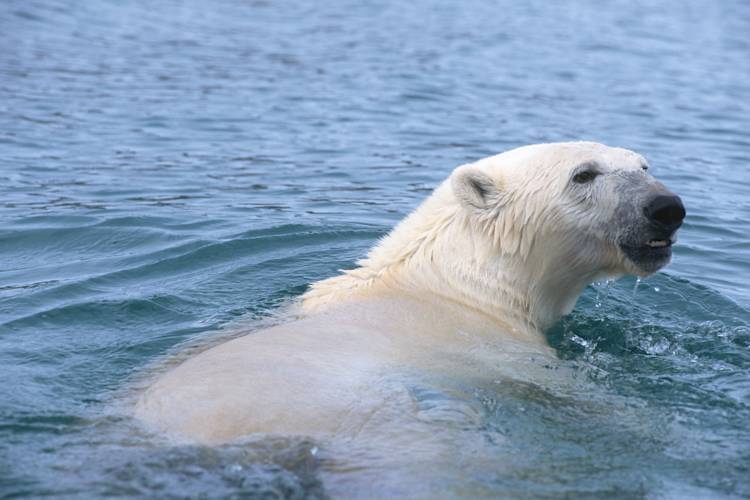
In addition to 2 layers of fur, a thick layer of fat helps keep the bears warm. A polar conduct'southward body fatty can mensurate up to xi.4 cm (4.49 in).
In the water, polar bears rely more than on their fat than their fur to keep out the cold; wet fur is a poor insulator. That'south why mother bears don't similar to swim with young cubs in the spring—the cubs don't have enough fat to stay warm.


Specialized Paws
Polar bear paws are ideal for getting around in the Arctic.
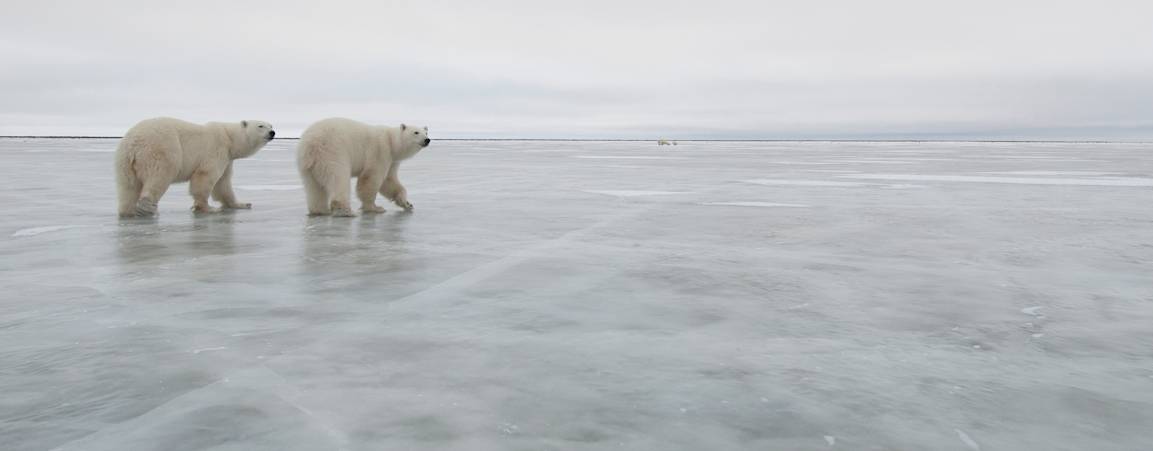
They're huge—every bit big as dinner plates—and measure out upward to 30 cm (11.81 in) across. This helps the bears walk on thin ice without falling through.
The polar conduct's super-paws are also designed for swimming. The forepaws act like large paddles and their hind paws serve equally rudders.
Slip-Proof Treads
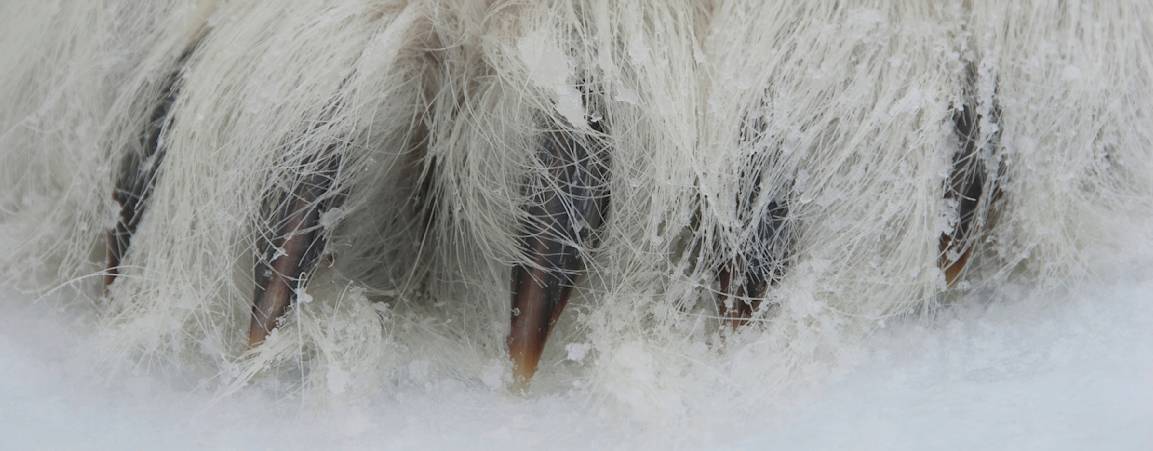
Blackness footpads on the bottom of each manus are covered by small, soft bumps known aspapillae.
Papillae grip the ice and keep the acquit from slipping. Tufts of fur between their toes and footpads help with warmth, as well.
Powerful Claws
Thick, curved, sharp, and strong—each measures more than than 5 cm (1.97 in) long. Polar bears use their claws to grab and concur slippery seal prey and to gain traction on water ice.
Ears & Tails
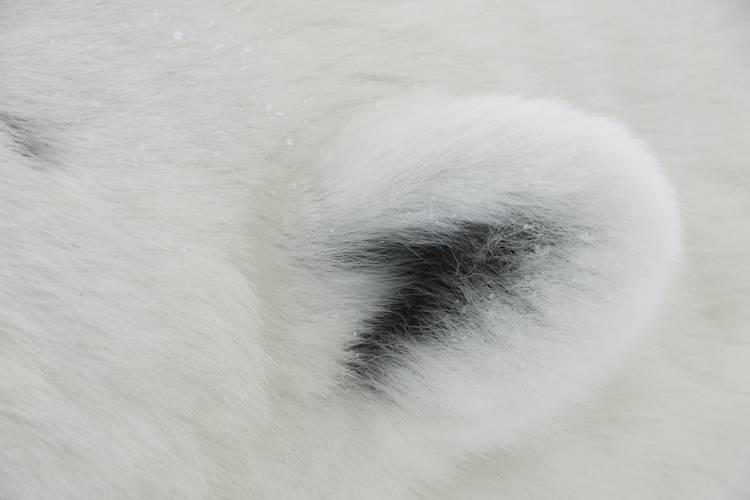
Polar bear ears are small and round, and their tails brusque and compact, to preclude heat loss and conserve the well-nigh warmth possible.
Photo: Daniel J. Cox
Size & Weight
Adult males normally weigh 350- 600 kg (775-1,300 lb). Developed females are usually 150-290 kg (330-650 lb). But some can be larger. Researchers in Canada estimated one male bear at 800 kg (1,700 lb)!
Polar bears are as well tall. Scientists usually measure their tiptop at the shoulder when on all fours. Those heights are typically i-1.5 1000 (3.3-v ft) for adult polar bears. An adult male may reach over 3 thousand (x ft) when standing on its hind legs.
Feeling inspired?
Join united states of america in our efforts to encourage leaders to brand a swift transition away from fossil fuels and to renewable energy sources, by spreading awareness nigh the real and pressing threat of climate warming.
Source: https://polarbearsinternational.org/polar-bears-changing-arctic/polar-bear-facts/adaptions-characteristics/
Posted by: harrisseatomint.blogspot.com
0 Response to "Which Of The Following Adaptations Would Help An Animal To Survive In A Polar Region?"
Post a Comment